Canned Mackerel Recipes: Easy Lemon-Herb Pasta

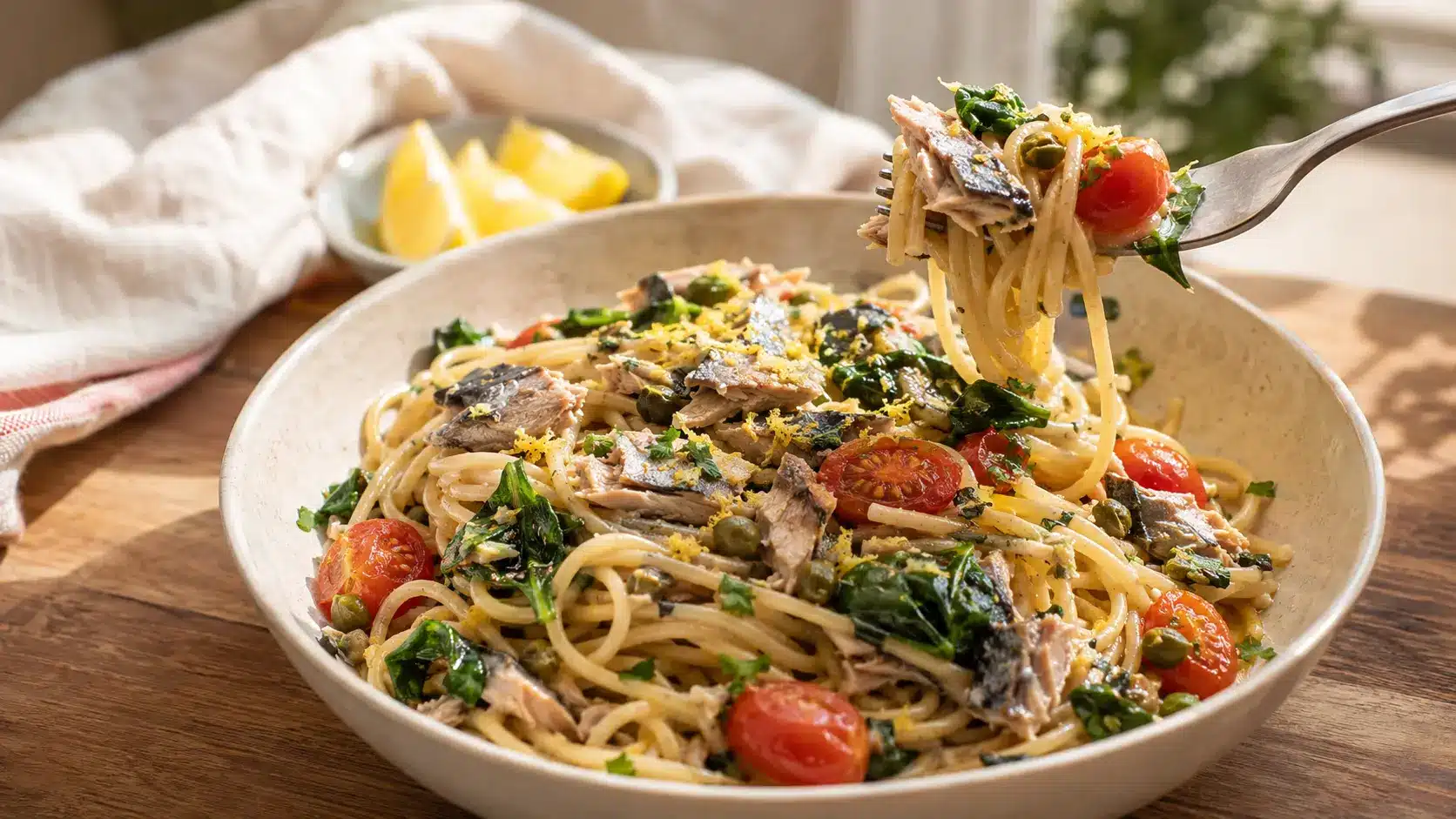
Canned mackerel recipes can turn one inexpensive pantry staple into a dinner that tastes bright, generous, and completely intentional. This lemon-herb pasta is the version I make when the refrigerator looks nearly empty but I still want a real meal: glossy spaghetti, sweet tomatoes, wilted spinach, capers, garlic, and tender flakes of mackerel. The fish is already cooked, so the whole dish comes together in about 20 minutes without a complicated sauce. I first tested it after a long market day, using only what was left in the cupboard. The secret was simple: warm the fish gently, save a spoonful of its oil, and finish with enough lemon to balance every savory bite.
Table of Contents
Part 1: Why Canned Mackerel Recipes Work
Choose the best canned mackerel for a mild, balanced flavor
Look for Atlantic, chub, or jack mackerel packed in olive oil or water. Oil-packed fish has a rounder flavor and gives you a useful head start on the pasta sauce, while water-packed mackerel feels lighter and lets the lemon stand out. Fillets are easiest to fold into pasta because they hold attractive flakes. Skin and soft bones are edible, but you can remove either if you prefer a smoother texture.
Read the species on the label rather than relying only on the word “mackerel.” The FDA fish advice chart separates lower-mercury options such as Atlantic and Pacific chub mackerel from king mackerel, which is listed as a choice to avoid. For another beginner-friendly way to use pantry seafood, try my savory sardines breakfast toast.
Build contrast around the rich fish
Mackerel is moist, savory, and fuller-flavored than canned tuna. It tastes best when every rich element meets something sharp or fresh. Lemon juice provides acidity, capers add a briny spark, tomatoes bring sweetness, and parsley keeps the finish clean. Baby spinach softens into the hot pasta and adds color without competing with the fish.
This balance is why easy canned mackerel recipes do not need heavy cream or a long ingredient list. Garlic, olive oil, pasta water, and the seasoned oil from the tin create a silky coating in minutes. If you enjoy building small bites around bold seafood, the same contrast of fish, citrus, pickles, and creamy elements appears in my tinned fish charcuterie board.
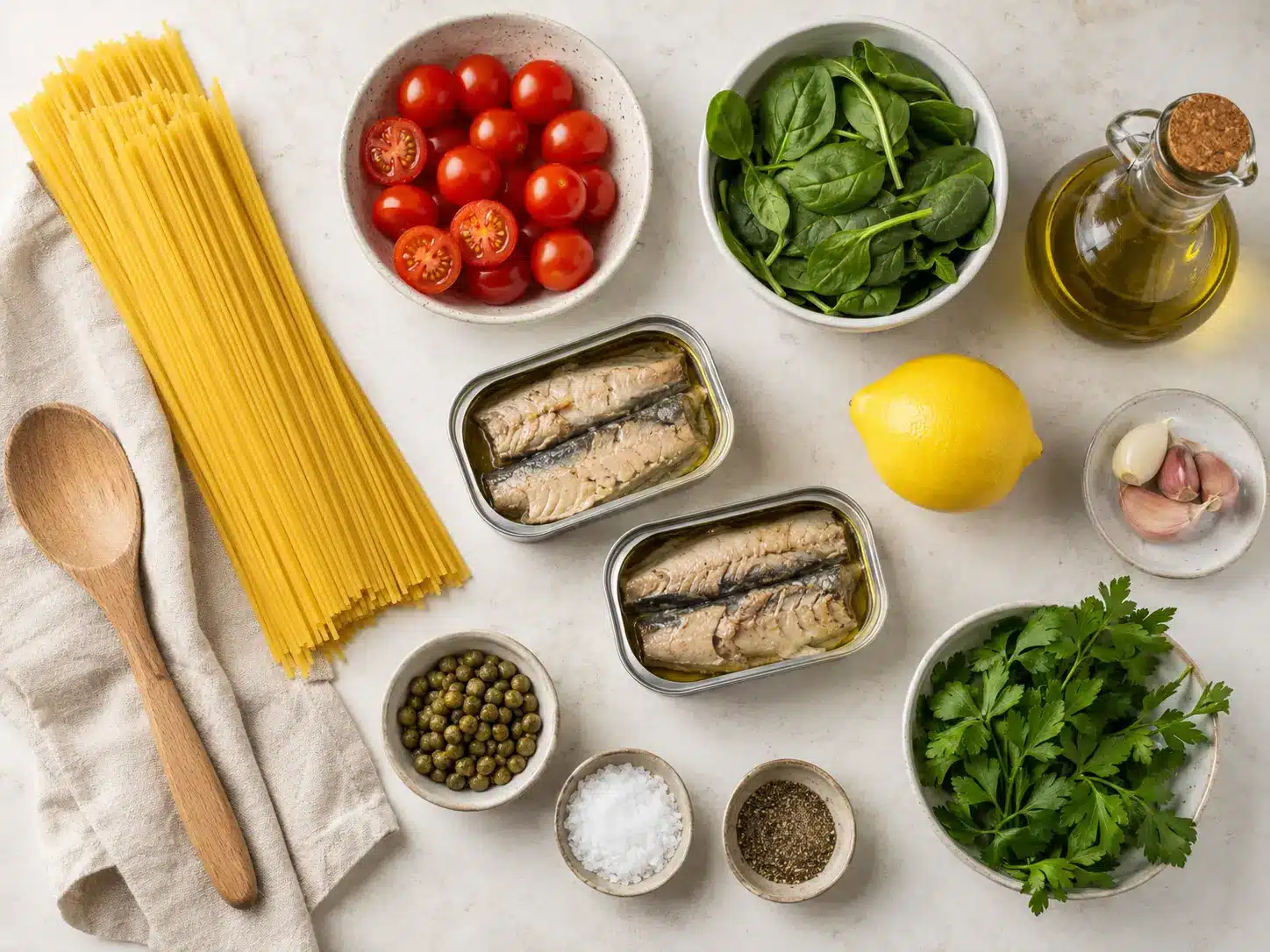
Part 2: Make the Lemon-Herb Canned Mackerel Pasta
Start the quick tomato, garlic, and lemon sauce
Bring a large pot of salted water to a boil and cook the spaghetti until just shy of al dente. Before draining, reserve at least one cup of the cloudy cooking water. That starch is what joins the olive oil and lemon into a light sauce instead of leaving greasy pasta. While the water heats, halve the tomatoes, mince the garlic, zest the lemon, and drain the mackerel over a bowl.
Warm olive oil and one tablespoon of flavorful tin oil in a wide skillet over medium heat. Add the tomatoes and let their cut sides blister without constant stirring. When they begin to collapse, add garlic, capers, and red pepper flakes. Cook only until fragrant, about 30 seconds. Garlic that turns dark will make the entire dish bitter. This fast pan rhythm also works well for the vegetable base in my easy fried cabbage recipe.
Emulsify the pasta, then fold in the fish gently
Add the drained spaghetti directly to the skillet with half a cup of reserved pasta water. Toss vigorously until the liquid looks glossy and lightly coats every strand. Add the spinach in handfuls, allowing each addition to wilt. Turn the heat to low before adding the mackerel. Break each fillet into large pieces with a fork, then fold rather than stir so the fish remains visible.
Remove the skillet from the heat and add lemon zest, two tablespoons of lemon juice, parsley, and black pepper. Taste before adding salt because canned fish and capers already contribute plenty. If the pasta seems tight, loosen it with more pasta water one tablespoon at a time. If it tastes rich, add lemon; if it tastes sharp, add a small drizzle of olive oil. That simple adjustment is the heart of how to cook canned mackerel without hiding its character.
Part 3: Variations and Troubleshooting
Turn the same pantry fish into four easy meals
Canned mackerel pasta is only one useful direction. For toast, mash the fish lightly with lemon, Dijon mustard, parsley, and Greek yogurt, then spoon it over crisp sourdough. For a rice bowl, place warm rice under mackerel, cucumber, avocado, scallions, and a sesame-lime dressing. For quick patties, combine drained fish with egg, breadcrumbs, herbs, and mustard, then pan-sear until golden.
You can also make a warm potato salad by tossing steamed baby potatoes with mackerel, green beans, capers, parsley, and a mustard vinaigrette. These variations make canned fish practical for lunches as well as dinner. Keep the bowl components separate for meal prep, following the same make-ahead logic as my budget-friendly meal prep ideas. The fish stays appealing when wet dressings are added shortly before serving.
Fix pasta that tastes fishy, salty, dry, or oily
If the flavor seems too strong, do not cook the mackerel longer. Heat concentrates its aroma. Instead, take the skillet off the stove and add lemon, parsley, tomatoes, or a spoonful of plain yogurt. If the dish tastes salty, skip added salt and capers, then increase the unsalted pasta, spinach, or tomatoes. A squeeze of lemon improves balance without adding more sodium.
Dry pasta needs reserved cooking water, not another large pour of oil. Add the water gradually while tossing so it emulsifies with the fat already in the pan. If the sauce looks oily, add more pasta water and lemon, then toss firmly. If the fish has disappeared into tiny crumbs, it was stirred too aggressively. Keep the pieces large and fold them in last. These small controls turn a convenient pantry meal into a healthy mackerel dinner with a polished texture.
Part 4: Serving, Storage, and Safety
Serve the pasta with light, crisp sides
Bring the skillet to the table while the pasta is glossy and warm. Finish each bowl with parsley, lemon zest, black pepper, and a few capers. A peppery arugula salad or roasted broccoli keeps the plate fresh. Garlic bread works for a heartier meal, but avoid an overly salty side because the mackerel already carries plenty of savory flavor.
For date night, serve smaller bowls beside the simple vegetables from my healthy romantic dinner for two. A cold citrus drink also complements the fish; choose one from my summer lemonades and iced teas. Parmesan is optional. A small amount adds richness, while toasted breadcrumbs provide crunch without covering the mackerel.
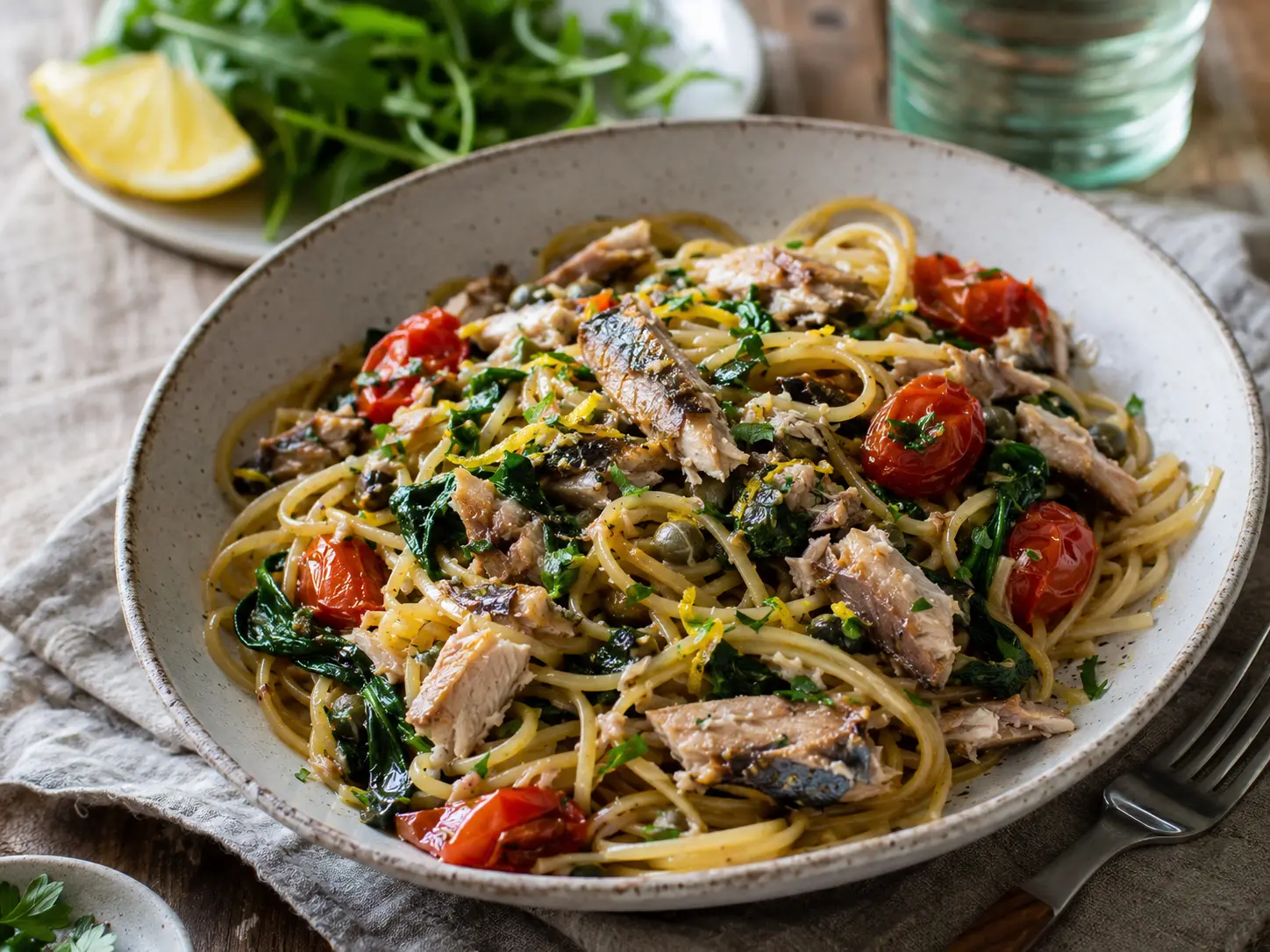
Refrigerate leftovers and reheat without drying the fish
Transfer leftovers to a shallow covered container within two hours and refrigerate for up to three days. The USDA’s FoodData Central mackerel listings are useful when you need nutrition details for a specific species or product, since values can vary by packing liquid and preparation.
Reheat the pasta gently in a covered skillet over low heat with one or two tablespoons of water. Stop as soon as it is hot; repeated high heat can make the fish firm and intensify its aroma. The microwave also works in short intervals with a damp paper towel over the bowl. Freezing is possible for up to one month, but the pasta becomes softer after thawing. For the best result, freeze the sauce and mackerel separately from freshly cooked pasta.
Frequently Asked Questions
Can you eat canned mackerel straight from the can?
Yes. Canned mackerel is fully cooked and can be eaten directly from the can. Drain it for salads and toast, or save a little seasoned oil to flavor pasta and rice bowls.
How do you make canned mackerel taste less fishy?
Add acid and fresh ingredients rather than cooking it longer. Lemon juice, tomatoes, parsley, cucumber, mustard, yogurt, and pickled onions all balance the rich flavor.
Do you remove the bones and skin from canned mackerel?
You do not have to remove them because the skin and small bones are edible and softened during canning. Remove either one if you prefer a milder flavor or smoother texture.
How long do canned mackerel pasta leftovers last?
Store cooled pasta in a covered container in the refrigerator for up to three days. Reheat gently with a splash of water so the pasta loosens without drying the fish.
20-Minute Lemon-Herb Canned Mackerel Pasta

A quick pantry pasta with flaky canned mackerel, blistered tomatoes, spinach, capers, garlic, lemon, parsley, and a glossy olive-oil sauce.
- Prep Time: PT8M
- Cook Time: PT12M
- Total Time: PT20M
- Yield: 4 servings 1x
- Category: Dinner
- Method: Stovetop
- Cuisine: Mediterranean-American
Ingredients
- 12 ounces spaghetti or linguine
- 2 cans (4 to 5 ounces each) mackerel in olive oil, drained with 1 tablespoon oil reserved
- 1 tablespoon extra-virgin olive oil
- 2 cups cherry tomatoes, halved
- 3 garlic cloves, finely minced
- 2 tablespoons capers, drained
- 1/4 teaspoon red pepper flakes, optional
- 4 packed cups baby spinach
- 1 large lemon, zested and juiced
- 1/3 cup chopped fresh parsley
- 1/2 teaspoon freshly ground black pepper
- Kosher salt, only as needed
Instructions
- Bring a large pot of salted water to a boil. Cook the pasta until just shy of al dente, then reserve 1 cup pasta water before draining.
- While the pasta cooks, drain the mackerel over a bowl and reserve 1 tablespoon of its flavorful oil. Break the fillets into large flakes.
- Heat the reserved tin oil and olive oil in a wide skillet over medium heat. Add tomatoes cut-side down and cook for 3 to 4 minutes.
- Add garlic, capers, and red pepper flakes. Cook for about 30 seconds, only until the garlic smells fragrant.
- Add the drained pasta and 1/2 cup reserved pasta water. Toss vigorously for 1 to 2 minutes until the sauce looks glossy.
- Add spinach in handfuls and toss until just wilted. Reduce the heat to low.
- Fold in the mackerel gently, keeping the flakes large. Warm for about 1 minute without simmering hard.
- Remove from the heat. Add lemon zest, 2 tablespoons lemon juice, parsley, and black pepper. Loosen with more pasta water as needed.
- Taste before adding salt. Serve immediately with extra lemon, parsley, and capers if desired.
Notes
Check the species on the label and choose Atlantic, chub, or jack mackerel. Fold the fish in at the end so it stays moist and visibly flaky.
Nutrition
- Serving Size: 1 generous bowl
- Calories: 510
- Sugar: 6 g
- Sodium: 610 mg
- Fat: 18 g
- Saturated Fat: 3 g
- Unsaturated Fat: 14 g
- Trans Fat: 0 g
- Carbohydrates: 62 g
- Fiber: 6 g
- Protein: 28 g
- Cholesterol: 45 mg
Keywords: canned mackerel recipes, easy canned mackerel recipes, canned mackerel pasta, how to cook canned mackerel, healthy mackerel dinner
Conclusion
The most dependable canned mackerel recipes treat the fish as a finished ingredient, not something that needs hard cooking. In this pasta, tomatoes, garlic, capers, spinach, lemon, and starchy water create a glossy sauce before the mackerel goes into the skillet. Folding the fish in at the end protects its tender flakes, while citrus and herbs balance its richness. Once you understand that order, the same tins can become toast, rice bowls, patties, or warm potato salad. Keep a few cans in the pantry, check the species on the label, and you will always have the beginning of a fast, satisfying dinner.

COOKED WITH HEART
A recipe by Hana
Easy, generous, carefully tested recipes to help you cook well without making everyday life complicated.
Discover more recipes →You Might Also Like
Pickle de Gallo: The Crunchy Pickle Salsa You Need
Pickle de Gallo combines crisp dill pickles, fresh vegetables, lime, herbs, and jalapeño in a tangy…
Get the recipe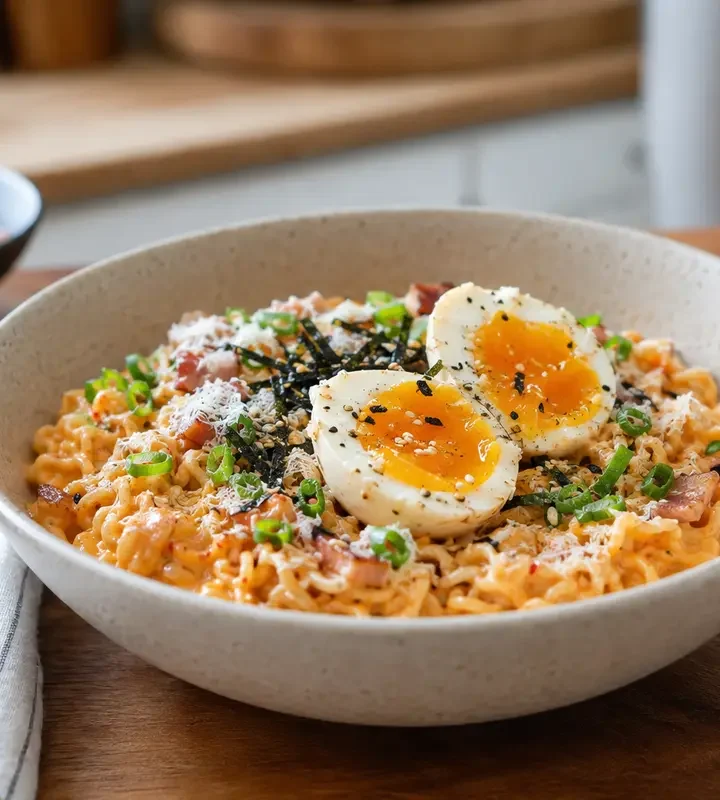
Carbonara Buldak Ramen Recipe: Creamy and Spicy
This Carbonara Buldak Ramen Recipe turns fiery Korean instant noodles into a creamy 20-minute dinner with…
Get the recipe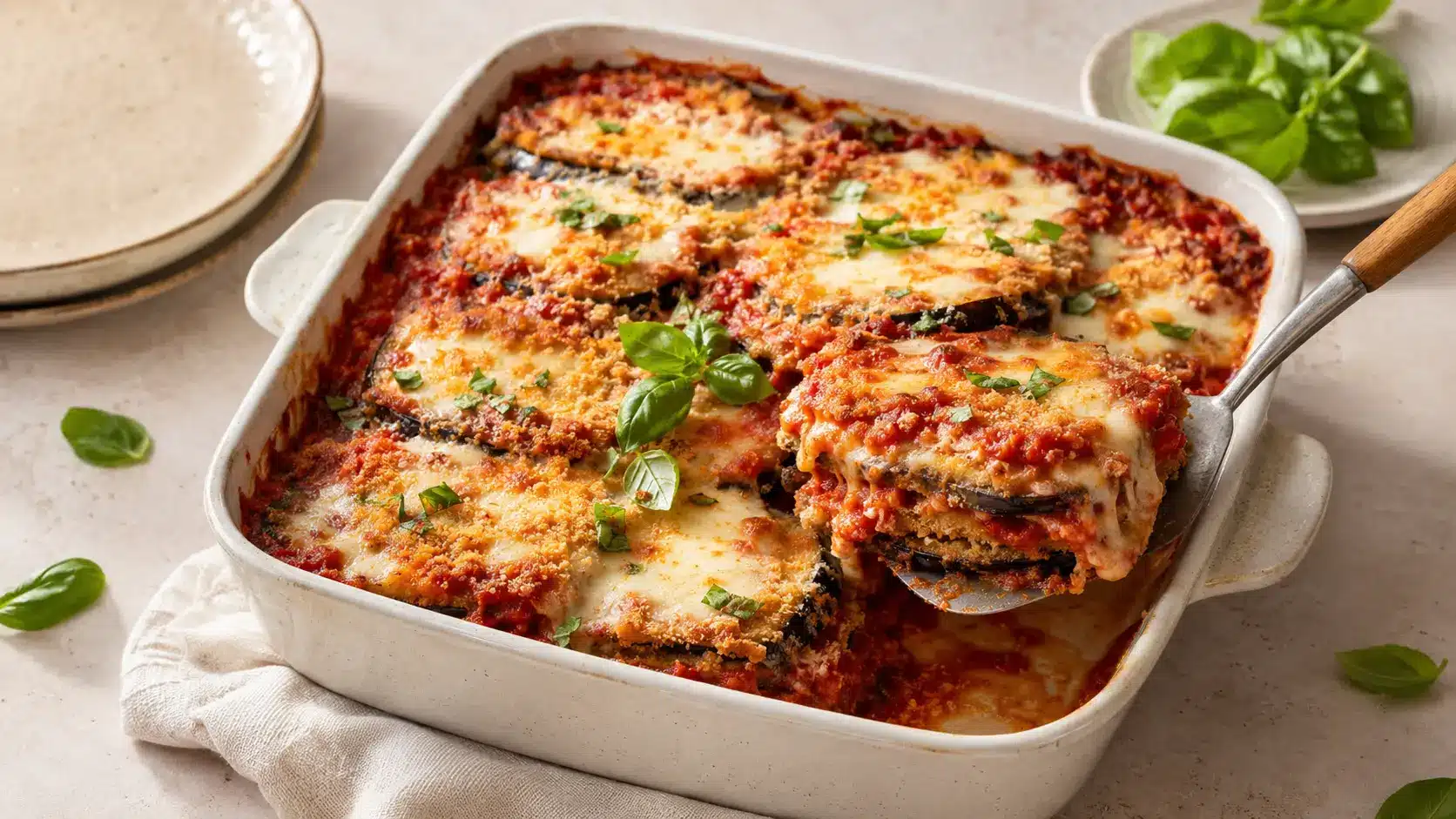
Eggplant Parmesan Recipe: Crispy, Saucy, and Cheesy
A dependable baked eggplant Parmesan with crisp breaded slices, bright marinara, melted mozzarella, make-ahead guidance, and…
Get the recipe