Leftover Spaghetti Recipes: Crispy Cheesy Skillet

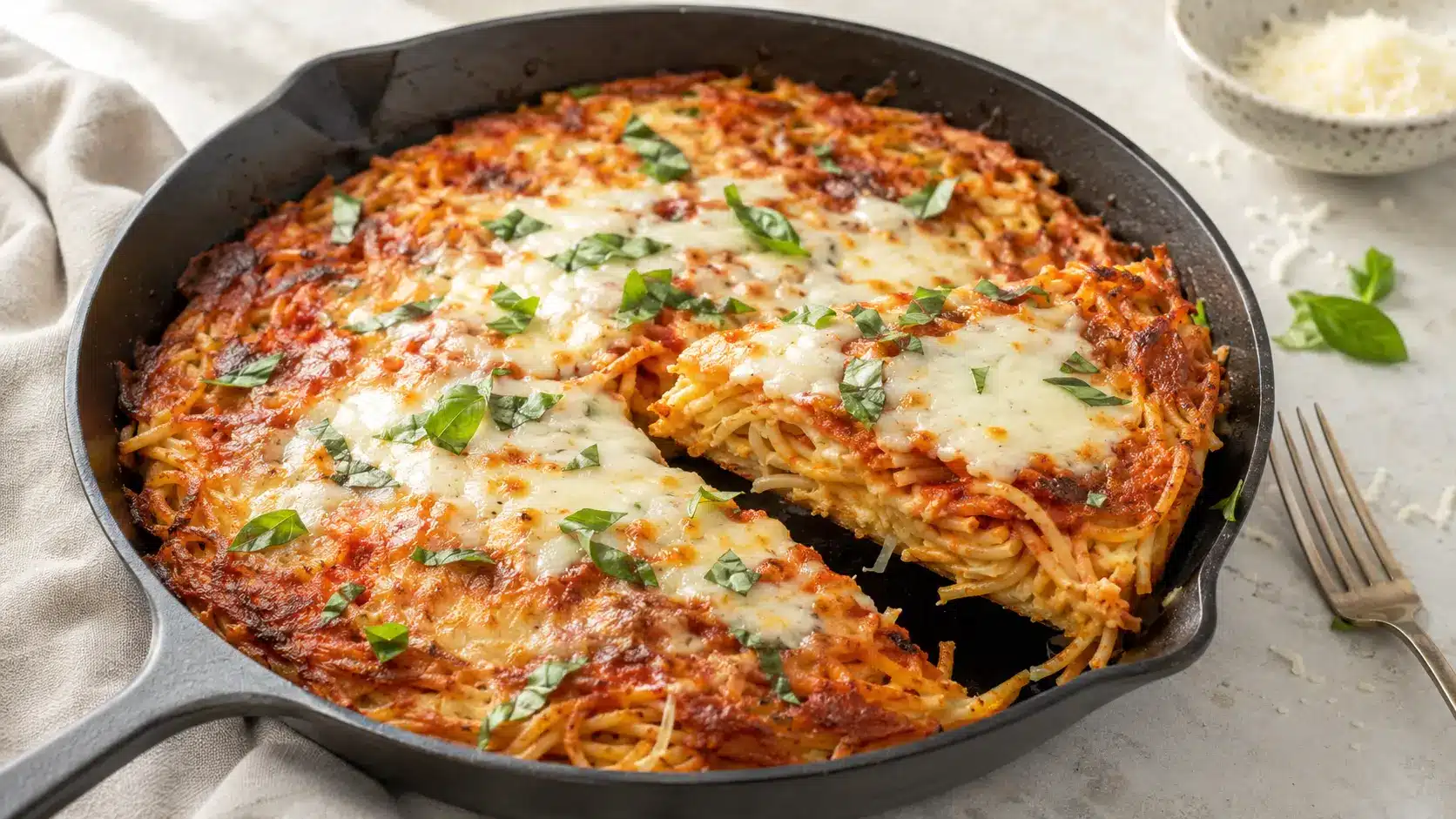
Table of Contents
A container of cold spaghetti may not look exciting, but it is the beginning of one of the easiest dinners in my kitchen. Of all the leftover spaghetti recipes I have tried, this crispy cheesy spaghetti skillet is the one my family requests again. Eggs hold the noodles together, mozzarella melts through the middle, and the bottom develops the golden edges that reheated pasta usually lacks. It works with plain cooked noodles or spaghetti already coated in tomato sauce, and it moves from refrigerator to table in about 25 minutes. Instead of serving yesterday’s dinner exactly the same way, you get a new meal with a crisp outside, tender center, and plenty of comforting Italian-inspired flavor.

Why This Is One of the Best Leftover Spaghetti Recipes
This recipe solves the biggest leftover-pasta problem: texture. A microwave can make spaghetti soft and unevenly hot, while this skillet method turns the noodles into something intentionally crisp. The egg mixture binds the pasta into a sliceable round, and two cheeses add flavor without requiring a new pot of sauce.
It is also flexible. Use marinara-coated spaghetti, meat sauce, or plain noodles. Add cooked vegetables, small pieces of meat, or keep it simple. If you enjoy turning inexpensive pantry ingredients into satisfying meals, the same practical approach appears in my budget-friendly meal-prep ideas.
A real second-day transformation
The finished dish does not feel like a compromise. The crisp noodle edges, melted cheese, and wedge-shaped servings give the spaghetti a completely different identity. A green salad turns it into dinner; smaller wedges make a handy lunch or snack.
Ready with basic ingredients
Besides leftover spaghetti, you need eggs, cheese, oil, and seasonings. Onion and garlic deepen the flavor, but the recipe still works if you omit them. It is a useful formula to remember when grocery day is still a few days away.
Ingredients You’ll Need

- Leftover spaghetti: Use cold cooked pasta, preferably from the refrigerator. Tomato-coated noodles give the skillet extra color and flavor.
- Eggs: They bind the strands together and create a tender, sliceable center.
- Mozzarella: Low-moisture shredded mozzarella melts evenly without making the skillet watery.
- Parmesan: This brings savory flavor and encourages browning around the edges.
- Onion and garlic: A short sauté removes their raw bite and creates a flavorful base.
- Olive oil: It helps the bottom become crisp and makes the finished round easier to release.
- Italian seasoning and red pepper flakes: These revive pasta that may have mellowed overnight.
- Fresh basil: Add it after cooking for color and a fresh finish.
If your spaghetti is plain, toss it with about one cup of marinara before measuring. If it already contains a generous amount of sauce, use it as it is. Very wet pasta should be drained briefly so the egg mixture can set.
How to Make a Crispy Leftover Spaghetti Skillet
1. Loosen the cold noodles
Place the leftover spaghetti in a large bowl. Use clean kitchen scissors to cut through the longest strands four or five times. You are not chopping the pasta into tiny pieces; shortening a few strands simply makes mixing and slicing easier. Let the noodles stand at room temperature while you prepare the pan.
2. Make the binder
Whisk the eggs with Parmesan, Italian seasoning, black pepper, and red pepper flakes. Add the spaghetti and half of the mozzarella, then toss until the egg mixture coats the noodles evenly. This is the moment to add up to one cup of finely chopped cooked vegetables or meat.
3. Build flavor in the skillet
Heat one tablespoon of olive oil in a 10-inch oven-safe skillet over medium heat. Cook the onion for three to four minutes, until softened. Add the garlic and stir for 30 seconds. Scrape the onion mixture into the pasta bowl, then carefully wipe loose bits from the skillet so they do not burn.
4. Crisp the bottom
Add the remaining oil and swirl it across the bottom and sides. Spread the spaghetti mixture evenly in the hot skillet, pressing it into a compact layer with a spatula. Cook undisturbed over medium-low heat for six to eight minutes. You should hear gentle sizzling, but the bottom should not smell scorched.
5. Melt the cheese and finish
Scatter the remaining mozzarella over the surface. Transfer the skillet to a 400°F oven and bake for 10 to 12 minutes, until the center is set and the cheese bubbles. Broil for one minute only if you want deeper color, watching continuously. Rest the skillet for five minutes before loosening the edge and cutting it into wedges.
Tips for the Crispiest Results
Start with cold spaghetti
Chilled pasta is firmer and easier to press into the pan than freshly cooked noodles. It also contains less surface moisture after resting overnight. Do not rinse the leftovers; a little starch helps the mixture hold together.
Use the right size skillet
A 10-inch skillet creates a round thick enough to remain tender inside but thin enough to crisp underneath. In a larger pan, the noodles can dry before the eggs set. A well-seasoned cast-iron or reliable nonstick oven-safe skillet gives the easiest release.
Do not stir after pressing
Once the spaghetti is in the skillet, leave it alone. Stirring interrupts the crust. Use medium-low heat and allow time to do the work. If your stove runs hot, rotate the pan once instead of lifting the pasta repeatedly.
Rest before slicing
The five-minute rest is small but important. It lets the egg and cheese settle, so the wedges keep their shape. Run a thin spatula around the edge first, then use a serrated knife or sharp chef’s knife to portion the round.
Easy Variations for Leftover Spaghetti
Think of the base recipe as a template. Keep additions chopped small and limit them to about one cup so the skillet still holds together.
- Meatball version: Fold in chopped cooked meatballs and add a few spoonfuls of marinara on top.
- Vegetable version: Use sautéed mushrooms, spinach squeezed very dry, zucchini, or roasted peppers.
- Pizza-style: Add diced pepperoni and finish with mozzarella, oregano, and a small amount of sauce for dipping.
- Spicy version: Increase the red pepper flakes and add chopped pickled peppers.
- Extra-protein version: Add cooked chicken, turkey, or crumbled sausage.
For another recipe that gives humble leftovers a crisp, satisfying makeover, try my easy fried cabbage. When you want a hearty tomato-based bowl instead, Golumpki soup offers cabbage, beef, and rice in comforting broth.
Three More Quick Ways to Use Leftover Spaghetti
Spaghetti muffins
Mix the same egg-and-cheese base, divide it among a well-greased muffin pan, and bake at 375°F until set and browned around the edges. These portions are convenient for lunchboxes. Cooking time varies with the pan, so begin checking at 15 minutes.
Crispy noodle nests
Twirl small bundles of lightly sauced noodles into an oiled skillet and cook until crisp on both sides. Top each nest with a spoonful of warm marinara, Parmesan, and basil. These make a playful appetizer without needing a special mold.
Spaghetti-stuffed peppers
Combine chopped spaghetti with sauce and cheese, spoon it into halved bell peppers, and bake until the peppers soften. Cover for the first part of baking, then uncover so the cheese can brown. This version stretches a small container of pasta into several portions.
Storage, Reheating, and Food Safety
Cooked spaghetti should be refrigerated promptly in a shallow, covered container. Use leftovers within the safe storage window recommended for cooked foods and discard pasta that has remained at room temperature too long. The official FoodSafety.gov cold-storage chart is a useful current reference.
Store cooked skillet wedges in an airtight container in the refrigerator for up to three days, counting from when the original spaghetti was first cooked. The transformation does not restart the storage clock. Reheat wedges in a lightly oiled covered skillet over low heat, uncovering at the end to restore the bottom crust. An air fryer at moderate heat also works well.
For nutrition details on pasta, eggs, cheese, and specific brands, consult USDA FoodData Central. The nutrition estimate below is a guide because leftover sauce and add-ins can change it considerably.
What to Serve With It
A sharp green salad with lemon vinaigrette balances the cheese and crisp noodles. Roasted broccoli, garlicky green beans, or a cucumber salad are also easy choices. For a casual spread, cut the skillet into narrow wedges and serve it beside olives, sliced vegetables, and warm marinara for dipping.

If you are planning several practical meals at once, pair this idea with my high-protein dinner ideas. For a different make-ahead format, the quick dinner for two guide offers more simple combinations.
Frequently Asked Questions
Can I use leftover spaghetti with meat sauce?
Yes. Break large meat pieces into smaller bits and avoid adding extra sauce if the pasta is already very wet. You can reduce the mozzarella slightly when the original dish contains plenty of cheese.
Can I make this without an oven-safe skillet?
Yes. Crisp the bottom in a regular skillet, then slide the mixture into a greased baking dish and finish it in the oven. The shape may be less neat, but the flavor remains the same.
Can I make leftover spaghetti recipes without eggs?
You can make crispy noodle nests or a simple baked spaghetti without eggs, but this sliceable skillet needs a binder. A tested commercial egg replacer may work, although the texture and setting time will differ.
Does plain spaghetti work?
Yes. Toss four cups of plain cooked spaghetti with about one cup of thick marinara before adding the egg mixture. Pesto can also work, though its oil content may produce a softer center.
Can I freeze the finished skillet?
You can freeze cooled wedges in airtight wrapping, but the noodles may soften after thawing. Refrigerated portions have the best texture. Reheat from thawed in a skillet or air fryer to bring back some crispness.
Final Thoughts
The best leftover spaghetti recipes make yesterday’s pasta feel useful rather than repetitive. This skillet does exactly that with a short ingredient list and a simple two-part cooking method: crisp the bottom on the stove, then finish the center and cheese in the oven. Keep the basic ratio of four cups pasta to three eggs, customize the add-ins, and you have an adaptable dinner worth planning leftovers for.
[hanaeats_recipe_card]

COOKED WITH HEART
A recipe by Hana
Easy, generous, carefully tested recipes to help you cook well without making everyday life complicated.
Discover more recipes →You Might Also Like
Pickle de Gallo: The Crunchy Pickle Salsa You Need
Pickle de Gallo combines crisp dill pickles, fresh vegetables, lime, herbs, and jalapeño in a tangy…
Get the recipe
Carbonara Buldak Ramen Recipe: Creamy and Spicy
This Carbonara Buldak Ramen Recipe turns fiery Korean instant noodles into a creamy 20-minute dinner with…
Get the recipe
Canned Mackerel Recipes: Easy Lemon-Herb Pasta
Turn canned mackerel into a bright 20-minute pasta with lemon, garlic, tomatoes, spinach, capers, plus four…
Get the recipe