Clam Chowder Recipes: Creamy New England Chowder

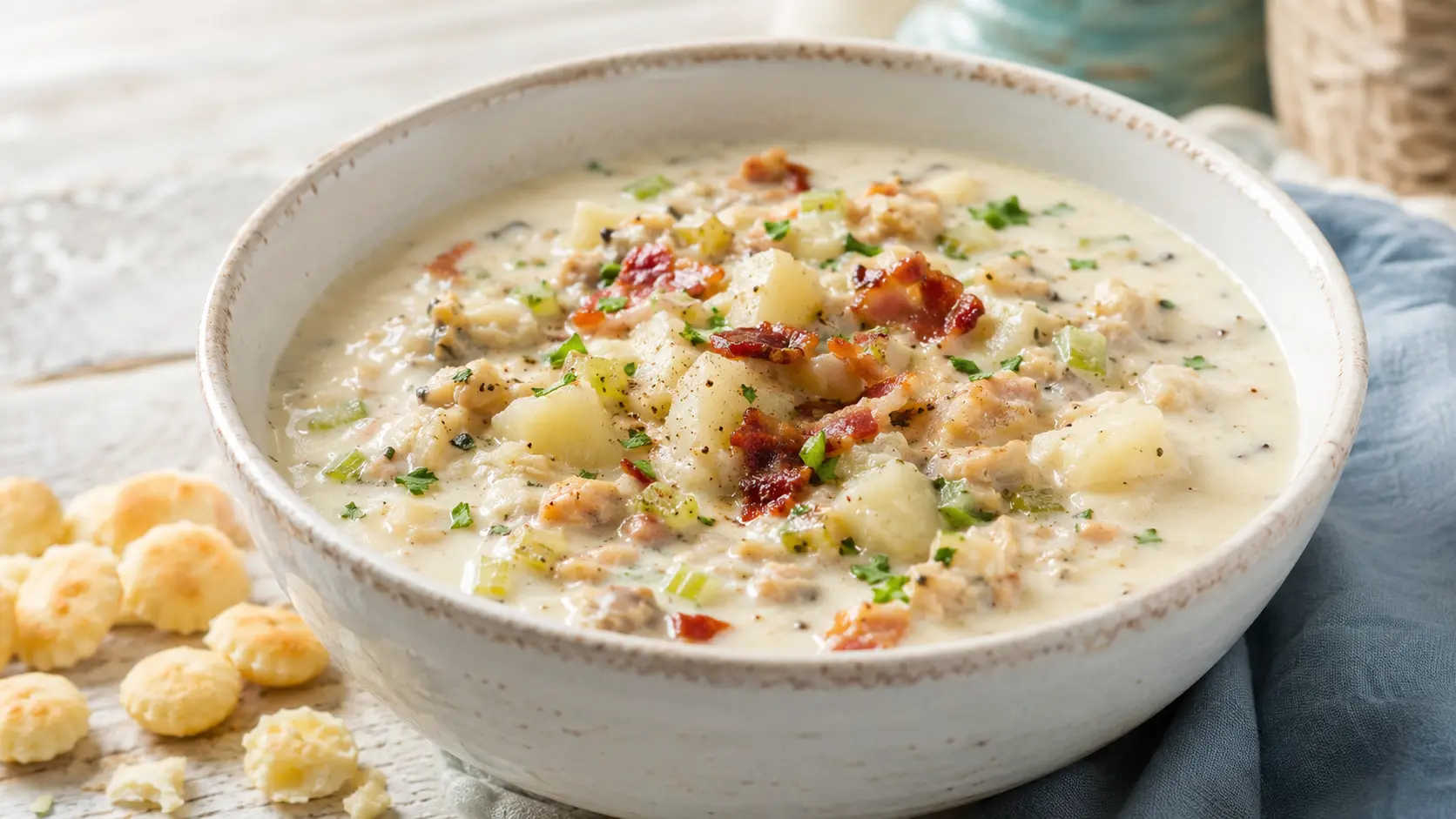
Table of Contents
Among all the clam chowder recipes you could make at home, this New England-style version is the one to choose when you want a creamy bowl that still tastes clearly of clams. It combines smoky bacon, tender potatoes, aromatic vegetables, clam juice, and just enough cream for a silky finish. The method is straightforward, but the order matters: render the bacon, soften the vegetables, build the broth, and add the clams only at the end. That keeps the potatoes intact and the seafood tender. The result is cozy enough for a cold evening, yet polished enough to serve to guests with warm bread and a crisp salad.
Part 1: Ingredients for Flavorful Clam Chowder
The ingredients that build the base
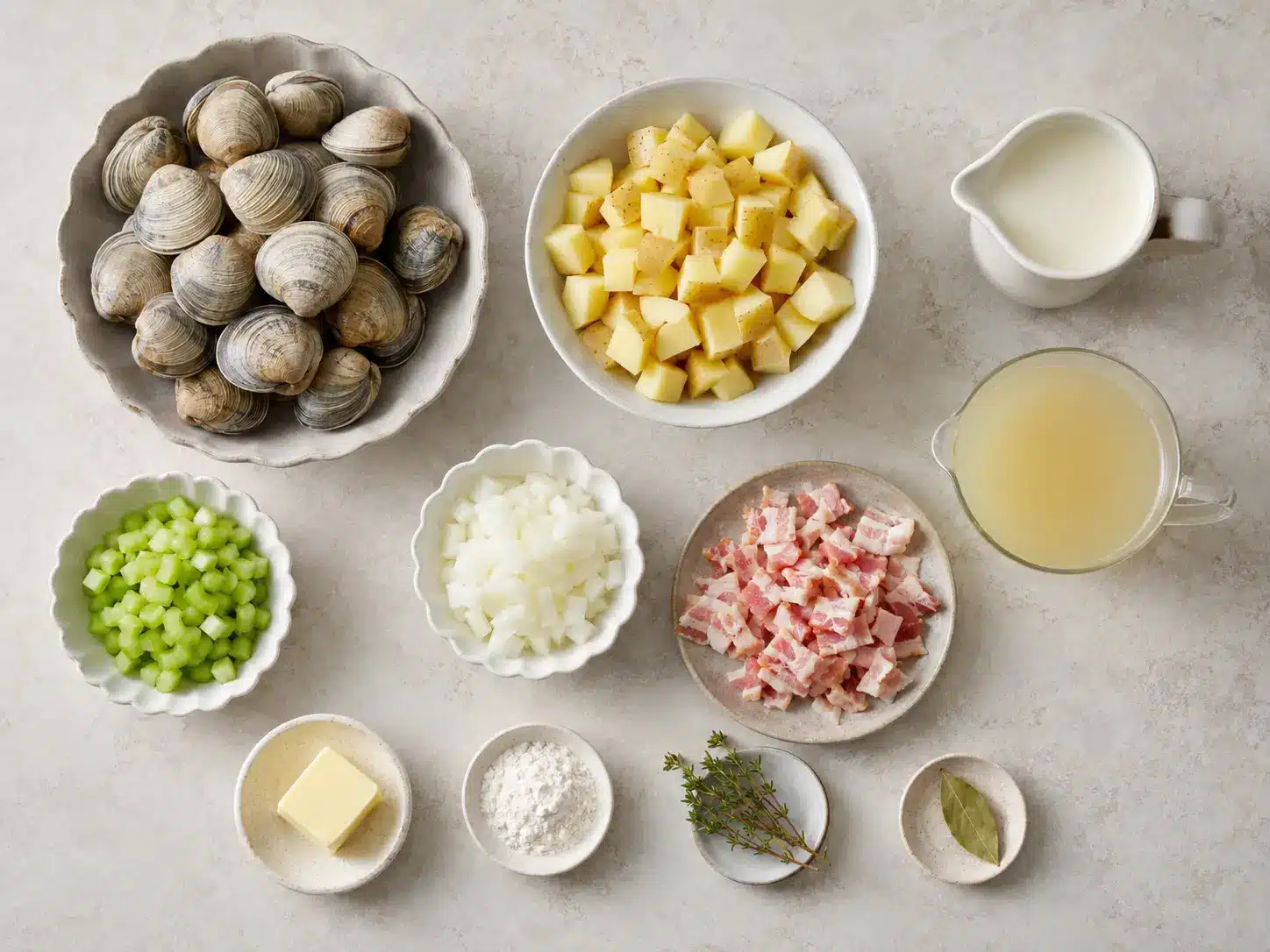
Bacon gives the chowder its first layer of savory flavor. Cook it slowly so the fat renders without burning; that fat becomes the cooking medium for the onion and celery. Yellow onion adds sweetness, celery brings freshness, and garlic rounds out the base without dominating the clams. Yukon Gold potatoes are especially useful because they become tender while holding their shape. Russets also work, but they release more starch and produce a thicker, softer chowder.
Clam juice is more important than extra cream. It gives the soup a clean ocean flavor and prevents it from tasting like a generic potato soup. The liquid drained from canned clams adds another concentrated layer. A similar balance between seafood and bright garnishes appears in this tinned fish charcuterie board.
Clams, dairy, and practical substitutions
Chopped canned clams make this recipe accessible and consistent throughout the year. Drain them, reserve the liquid, and add the meat during the final minutes so it stays tender. Fresh shucked clams can replace canned clams, but their salinity varies, so taste before adding salt. Whole milk keeps the soup lighter, while half-and-half creates a richer finish. Heavy cream is best used in a modest amount; too much can hide the seafood flavor.
For a dairy-light version, use whole milk and omit the cream. Make it gluten-free with a measure-for-measure flour blend or a cornstarch slurry. Do not replace clam juice entirely with chicken broth; the chowder needs clam liquid to keep its identity. For another creamy dinner, see this cabbage Alfredo.
Part 2: How to Make New England Clam Chowder
Build the soup in the correct order
Start with a cold heavy-bottomed pot and add diced bacon. Bring the heat to medium and cook until the pieces are crisp and the fat has rendered. Transfer the bacon to a plate, leaving about two tablespoons of fat in the pot. Add the onion and celery with a small pinch of salt. Cook until translucent and soft, then stir in the garlic for only thirty seconds.
Sprinkle flour over the vegetables and stir for one minute. This removes the raw flour taste and creates the roux that will thicken the broth. Add clam juice gradually while scraping the bottom of the pot. Stir in the reserved canned-clam liquid, potatoes, thyme, and bay leaf. The liquid should cover most of the potatoes; add a little water if needed. Bring it to a gentle simmer rather than a hard boil.
Finish without overcooking the clams
Simmer until the potatoes are easily pierced with a knife, usually twelve to fifteen minutes. Stir gently so they do not break. Lower the heat before adding milk and cream, then warm the chowder without boiling to preserve a smooth texture.
Add the chopped clams during the last two or three minutes. They are already cooked and only need to heat through. Stir in half of the crisp bacon, black pepper, and a small splash of Worcestershire sauce if you like extra depth. Remove the bay leaf, then taste. Add salt only after the clams and bacon are in the pot. If seafood-centered dinners are a favorite, this high-protein salmon offers another easy option.
Part 3: Control the Texture and Avoid Common Problems
How to make chowder thick but not pasty
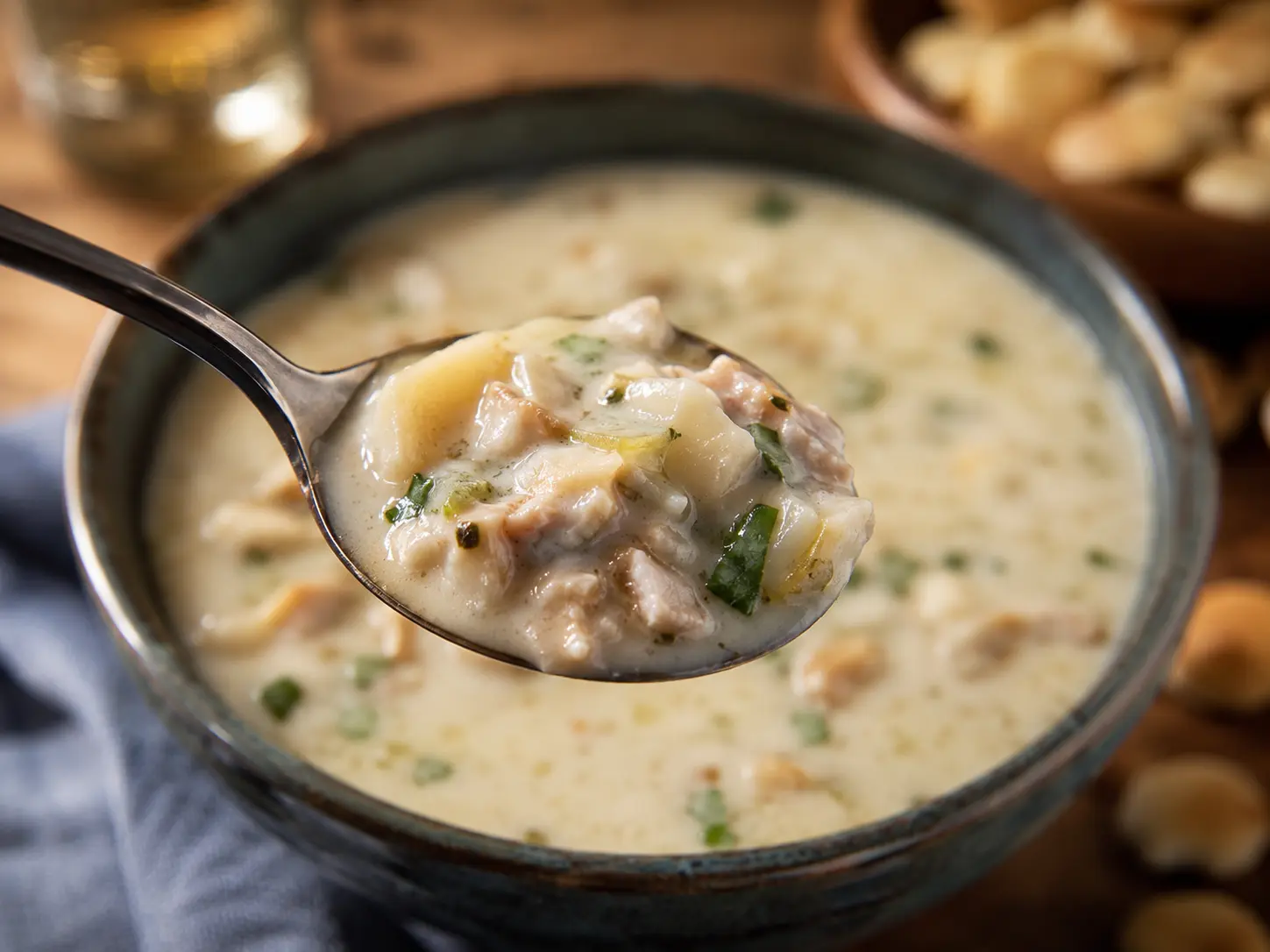
A good clam chowder should coat the spoon while still flowing easily. Flour, potato starch, and dairy work together, so the soup thickens as it rests. If it seems thin, wait five minutes. Then mash a few potato cubes against the pot and stir them back in.
If the chowder becomes too thick, loosen it with warm milk or clam juice, two tablespoons at a time. Avoid adding dry flour directly to the soup because it forms lumps. A slurry can rescue a thin batch: mix one tablespoon cornstarch with one tablespoon cold water, stir it into the gently simmering broth before adding the clams, and cook for one minute. The goal is a creamy broth, not a heavy sauce.
Troubleshooting curdling, rubbery clams, and flat flavor
Curdling usually comes from boiling dairy or adding cold cream to an aggressively hot pot. Lower the heat first and let the dairy lose its refrigerator chill before stirring it in. Rubbery clams are almost always overcooked, so keep them for the final minutes. If the soup tastes flat, it may need acidity rather than more salt. A teaspoon of lemon juice added off the heat can sharpen the flavors without making the chowder taste lemony.
Smoky bacon and briny clams already contain salt, which is why seasoning at the end is essential. Fresh thyme, parsley, black pepper, and a restrained dash of hot sauce can add dimension. For another soup that depends on careful seasoning and a comforting broth, try this Golumpki soup.
Part 4: Serving, Variations, and Storage
What to serve with clam chowder
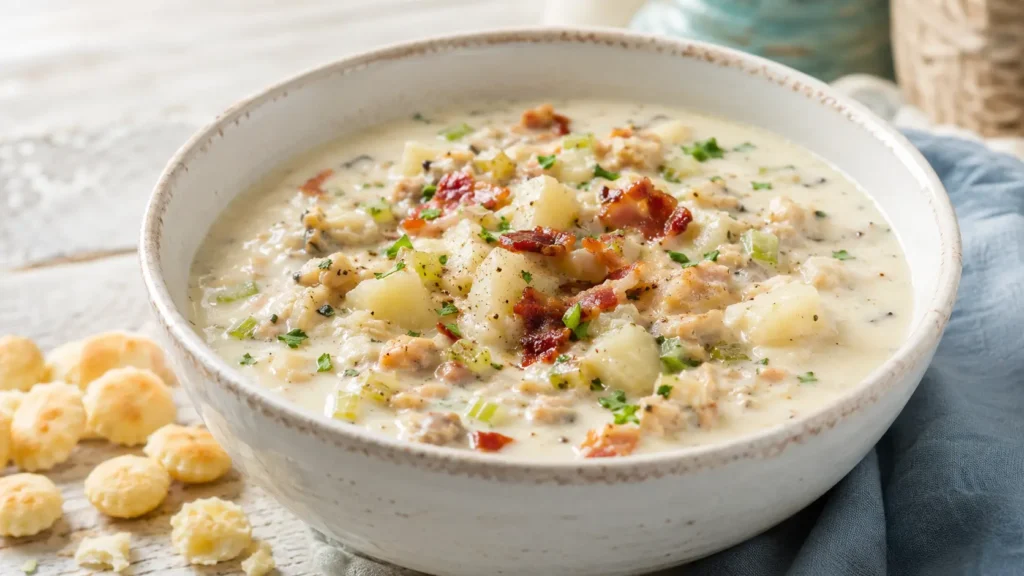
Ladle the chowder into warm bowls and finish with reserved bacon, parsley, black pepper, and oyster crackers. Crusty sourdough or a green salad keeps the meal balanced. For lunch, serve smaller cups beside toasted sandwiches. If you have extra cabbage, this easy fried cabbage with bacon is useful for another meal.
Variations, make-ahead tips, and safe storage
For corn clam chowder, add one cup of corn with the potatoes. For a smoky version, replace part of the bacon with smoked turkey, but keep a little bacon fat or butter for the vegetables. A lighter chowder can use whole milk in place of half-and-half. Leftover cooked fish can be folded in with the clams, although the finished soup will become more like a mixed seafood chowder.
Make the base through the potato step up to one day ahead, then cool and refrigerate it. Reheat gently and add the dairy and clams shortly before serving. Store finished chowder in shallow airtight containers within two hours. The FoodSafety.gov cold-storage chart recommends keeping the refrigerator at 40°F (4°C) or below, and the USDA leftovers guidance recommends using refrigerated leftovers within three to four days. Reheat over low heat and stir often; boiling can split the dairy. Serve leftover chowder with this leftover spaghetti guide bookmarked for your next practical dinner.
PrintCreamy New England Clam Chowder

A creamy New England-style clam chowder with tender potatoes, smoky bacon, and plenty of clam flavor.
- Prep Time: PT20M
- Cook Time: PT35M
- Total Time: PT55M
- Yield: 6 servings 1x
- Category: Soup
- Method: Stovetop
- Cuisine: American
Ingredients
- 6 slices thick-cut bacon, diced
- 1 medium yellow onion, finely diced
- 2 celery ribs, finely diced
- 2 garlic cloves, minced
- 1/4 cup all-purpose flour
- 2 bottles (8 ounces each) clam juice
- 3 cans (6.5 ounces each) chopped clams, drained with liquid reserved
- 1 1/2 pounds Yukon Gold potatoes, cut into 1/2-inch cubes
- 1 teaspoon fresh thyme leaves or 1/2 teaspoon dried thyme
- 1 bay leaf
- 2 cups whole milk
- 1/2 cup heavy cream
- 1 teaspoon Worcestershire sauce, optional
- 1/2 teaspoon black pepper, plus more to serve
- Kosher salt, to taste
- 2 tablespoons chopped parsley, for serving
- Oyster crackers or crusty bread, for serving
Instructions
- Place the diced bacon in a cold heavy-bottomed pot. Cook over medium heat for 8 to 10 minutes, stirring occasionally, until crisp and the fat has rendered. Transfer the bacon to a plate and leave about 2 tablespoons fat in the pot.
- Add the onion and celery with a small pinch of salt. Cook for 5 to 6 minutes until soft and translucent. Stir in the garlic and cook for 30 seconds.
- Sprinkle in the flour and stir continuously for 1 minute. Slowly pour in the bottled clam juice and reserved liquid from the canned clams while scraping the bottom of the pot.
- Add the potatoes, thyme, and bay leaf. Bring to a gentle simmer and cook for 12 to 15 minutes, or until the potatoes are tender when pierced with a knife.
- Reduce the heat to low. Stir in the milk, cream, Worcestershire sauce, black pepper, and half of the cooked bacon. Warm gently without boiling.
- Add the chopped clams and cook for 2 to 3 minutes, just until heated through. Remove the bay leaf and season with salt only after tasting.
- Rest the chowder for 5 minutes. Ladle into warm bowls and garnish with the remaining bacon, parsley, black pepper, and oyster crackers.
Notes
Do not boil after adding the dairy. Add the clams at the end so they remain tender. The chowder thickens slightly as it rests.
Nutrition
- Serving Size: 1 1/2 cups
- Calories: 460
- Sugar: 8 g
- Sodium: 980 mg
- Fat: 25 g
- Saturated Fat: 12 g
- Carbohydrates: 35 g
- Fiber: 3 g
- Protein: 22 g
- Cholesterol: 95 mg
Keywords: clam chowder recipes, New England clam chowder, creamy clam chowder
Frequently Asked Questions
Can I use fresh clams instead of canned clams?
Yes. Steam scrubbed fresh clams until they open, discard any that remain closed, and strain the cooking liquid carefully to remove grit. Chop the clam meat and add it at the end. Use the strained liquid as part of the clam juice, then adjust salt after tasting because fresh clam liquid can be quite briny.
Why is my clam chowder watery?
The potatoes may need more time, or the soup may not have rested long enough. Let it stand for five minutes first. Then mash several potato cubes into the broth. If it is still thin, use a small cornstarch slurry before adding or reheating the clams.
Can clam chowder be frozen?
You can freeze it, but dairy and potatoes may become grainy after thawing. For better results, freeze the cooked broth and potatoes before adding milk, cream, and clams. Thaw in the refrigerator, reheat gently, and finish with fresh dairy and clams.
What is the difference between New England and Manhattan clam chowder?
New England clam chowder has a pale, creamy broth with potatoes and dairy. Manhattan clam chowder uses a tomato-based broth and usually includes more vegetables. This recipe follows the New England style, with clam juice providing the seafood character and cream creating a smooth finish.
Conclusion
The best clam chowder recipes are not simply the richest ones. They balance briny clam flavor, tender potatoes, gentle smoke, and a creamy broth that never feels pasty. Build the base slowly, simmer the potatoes gently, lower the heat before adding dairy, and save the clams for the final minutes. Those small choices make the recipe reliable and keep every ingredient distinct. Serve it hot with crackers or crusty bread, then cool any leftovers promptly for an easy second meal. Once you understand the order and the texture cues, this New England clam chowder becomes a dependable cold-weather recipe rather than a once-a-year project.

COOKED WITH HEART
A recipe by Hana
Easy, generous, carefully tested recipes to help you cook well without making everyday life complicated.
Discover more recipes →You Might Also Like
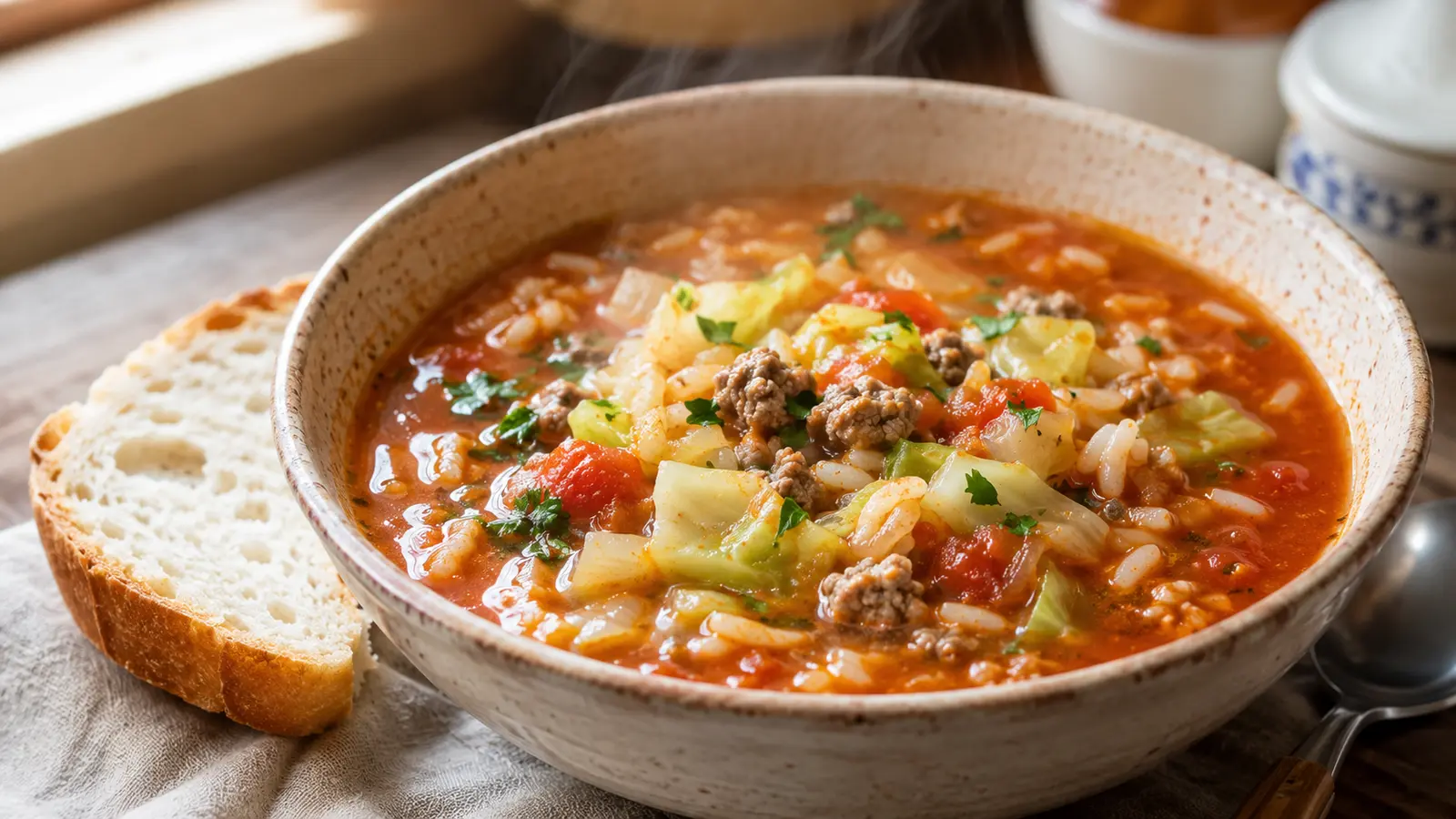
Easy Golumpki Soup Recipe with Ground Beef
A cozy one-pot golumpki soup with ground beef, tender cabbage, rice, and rich tomato broth—all the…
Get the recipe
Anti-Inflammatory Detox Soup for Weight Loss: Easy & Healthy
Introduction If you have been feeling sluggish, bloated, or just need a reset after a period…
Get the recipe
Mexican Noodle Soup: Cozy Comfort in Every Spoonful
Introduction Mexican Noodle Soup, or sopa de fideo, is more than just a recipe—it’s comfort in…
Get the recipe